

Carolina Planters Mostly Associated With
Copyright Discover
This page is from The Way We Lived in North Carolina, copyright 2003 by the University of North Carolina Printing. Classroom use of the materials on this web site is permissible, as is classroom presentation of this Web site. Linking from another web site is permissible. Materials including maps, text, and photographs, may be downloaded, printed, and/or copied for classroom or other educational uses provided that they include attribution to Joe A. Mobley, the University of North Carolina Press, and the North Carolina Office of Archives and History. Whatsoever other utilise including commerical utilise of these materials are not allowed without the limited permission of the rightsholders. For other uses non expressly immune under the guidelines above, delight contact the publishers.
Planters and Slaves: 1770-1820
By Elizabeth A. Fenn, Peter H. Wood, Harry L. Watson, Thomas H. Clayton, Sydney Nathans, Thomas C. Parramore, and Jean B. Anderson; Maps by Mark Anderson Moore. Edited by Joe A. Mobley. FromThe Style We Lived in North Carolina, 2003. Published by the North Carolina Function of Research and History in association with the University of North Carolina Press. Republished in NCpedia by permission.
Come across also: The Way We Lived in North Carolina: Introduction; Part I: Natives and Newcomers, North Carolina before 1770;Office Two: An Independent People, Due north Carolina, 1770-1820; Function Iii: Close to the Country, N Carolina, 1820-1870; Role 4: The Quest for Progress, North Carolina 1870-1920; Part V: Limited Lanes and Country Roads, North Carolina 1920-2001
Planters and Plantations
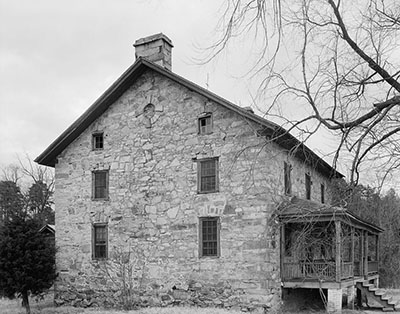 Hezekiah Alexander was yet another immigrant from further north who moved to Piedmont North Carolina in the 1760s. Alexander was a Presbyterian from Scotch-Irish stock, just the other contours of his life were remarkably like to those of yeomen like John Allen. He was born in 1728 in Cecil County, Maryland, not far from the Pennsylvania border. Like Allen's, his grandfather had come up from Ireland to the Delaware River Valley in the seventeenth century. His father became a man of some substance in his neighborhood, but Hezekiah and half dozen other of his begetter's xv children somewhen tried their luck in Mecklenburg County, North Carolina. Hezekiah Alexander was a blacksmith who bought state and became a farmer and cattle grower. He died in 1801, survived by his wife and nine of their x children, having earned an enviable position as an elder in his church and a distinguished Revolutionary patriot.
The most obvious deviation betwixt Hezekiah Alexander and his yeoman counterparts was his house. Known as the "Rock House," it stands on its original site in the nowadays urban center limits of Charlotte and forms a part of the Mint Museum of History. The Stone Firm is two-and-a-one-half stories high, with a dressed stone exterior and ii interior stone chimneys. There are three rooms downstairs; each one is heated by its own fireplace. The upstairs and downstairs are well lighted by many large glazed windows; there are fifty-fifty several small-scale windows in the attic. Alexander's estate inventory showed comparable signs of affluence: a silver scout and a series of loans to sons and other borrowers. Unlike his contemporaries John Allen and Silas Everitt, Hezekiah Alexander cut quite a figure in the globe.
The House in the Horseshoe sits on a gentle hill in northern Moore Canton. Below the house, broad, level fields stretch out toward the wooded banks of the Deep River, which reaches in a wide bend around three sides of the holding. At present a state celebrated site, the spot is peaceful, picturesque, and fertile; it is piece of cake to see why Philip Alston ( d. 1791) wanted to own it when he came to the district in 1772 and started to purchase land. Tradition says that a Scot named McFadden built the House in the Horseshoe for Alston. It too claims that after McFadden struck a white retainer and found himself prosecuted for attack, he became disgusted with American notions of equality and returned to Scotland.
During the American Revolution, Alston put his believing nature at the service of his country. He commanded a ring of soldiers confronting the actions of Tory (British sympathizer) guerrillas when they became active following the British invasion of North Carolina in 1780. On i occasion, Alston'due south company captured an accomplice of the Tory officer David Fanning. They beat their prisoner with musket butts in an unsuccessful effort to obtain information and and so left him to die. Discovering the murder, Fanning swore revenge and ambushed Alston and his men at the House in the Horseshoe on v August 1781. After a fierce skirmish, Alston was forced to give up and to promise not to fight the king's forces any longer. Bullet holes from this fight still scar the walls of Alston'southward dwelling house.
Slavery and Subtle Resistance
 Slavery had been a part of North Carolina gild from its beginning. The leading Lords Proprietors had been planters and slave traders in the West Indies, and they included the "peculiar institution" in their plans for their mainland colony. In Virginia and Southward Carolina, slave plantations were central features of society from the early eighteenth century onward. Cultivating tobacco to the north and rice to the south, slave labor in the colonies bordering Due north Carolina paid for the beautiful homes and elegant lifestyles of the colonial aristocracy. The aforementioned geographical handicaps that kept many yeomen out of the planter class kept Northward Carolina's smaller number of slaveholders from reaching the levels of abundance enjoyed past their counterparts to the north and southward. As a effect, the plantation organization in North Carolina was never as fully developed as it was elsewhere. Nevertheless, slavery was crucial to the character of North Carolina club.
For the nigh part, North Carolina slaves resisted the ability of their masters past individual and collective deportment that made their condition more bearable but did not challenge the arrangement of slavery as such. Bondsmen feigned sickness or ignorance, bankrupt tools, stole nutrient, sheltered runaways, and protected each other from the master's abuses. Among slaves, families were a source of personal pride and mutual back up for parents, children, and relatives akin. The slave community every bit a whole supported musicians, preachers, storytellers, healers, and arts and crafts workers who created a dynamic African American culture that affirmed the human dignity of even the most persecuted inhabitant of the quarters. Weddings, funerals, religious services, and holiday celebrations gave slaves an opportunity to assert their humanity and their rightful equality with whites.
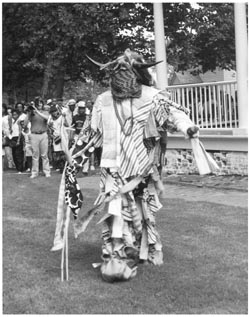
A hit example of African civilization survived in the "Jonkonnu" anniversary, which the slaves at Somerset performed every Christmas morning. A leading man of the slave customs would disguise himself as Jonkonnu in a garb of rags and animal skins. Joined by another slave in American Sun-style clothing, Jonkonnu would pb a large group of followers to the master's firm. Accompanied by drumming, dancing, and chanting, the pair demanded money from the master, mistress, and all white residents of the plantation. Success was followed by a full general celebration in the slave quarters. The Jonkonnu ritual appeared on other eastern North Carolina plantations and also amid slaves in Jamaica. The drums, the dancing, the chants, and the costume seem clearly derived from African models. When they used an African ceremony to extract money from their masters, the Somerset slaves reversed the normal social order of the plantation and reaffirmed their own dignity as independent human beings. Cultural expressions of black humanity were a vital office of the slaves' resistance to the psychological burdens of life in bondage.
When Jonkonnu gave orders every Christmas and Josiah Collins obeyed, the slave participants in the ritual had slyly claimed a moral right to modify places with their owners. Opposition to slavery periodically went beyond foot-dragging on the job and cultural challenges in the quarters, simply most acts of slave resistance were individual actions comparable to Pompey's brief flight from Belgrade.
Proceed reading: Towns in a Rural Society | North Carolina 1770-1820
References:
Fenn, Elizabeth Anne, and Joe A. Mobley. 2003. The fashion nosotros lived in N Carolina. Chapel Hill, NC [u.a.]: Published in clan with the Office of Athenaeum and History, North Carolina Dept. of Cultural Resource, by the University of N Carolina Press.
Image Credits
Johnston, Frances Benjamin, lensman.Hezekiah Alexander Rock Business firm, Charlotte vic., Mecklenburg County, N Carolina. Charlotte, Due north Carolina. 1936. Photograph. https://www.loc.gov/item/2017888583/.
20 March 2019 | Anderson, Jean B.

Carolina Planters Mostly Associated With,
Source: https://www.ncpedia.org/waywelived/planters-and-slaves
Posted by: albrechtaccourse.blogspot.com
0 Response to "Carolina Planters Mostly Associated With"
Post a Comment